

 Menu
Menu
Djembé Art - Exceptional - You can hear the Quality!
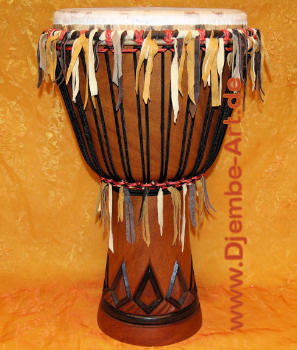
Djembé Art drums
- are tonely professional and outstanding
- create joy in playing and bring the rhythm fire to prominence
- fulfill highest quality expectations and are excellently handcrafted
- are unique examples, artistically tasteful and decoratively finished
Djembé Art quality demand
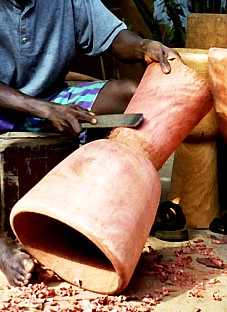
We specialise in making and marketing professional Djembe drums and are counted amongst suppliers of the top quality worldwide. Our drums are unique special examples with excellent tonal qualities. No mass production.
- Djembé Art brand drums cannot be compared with cheap Asian imports or tourist Djembes. Ours are solidly constructed and finished with high quality craftsmanship.
- The production of a Djembé Art instrument is considerably more work intensive and demanding, with higher material costs than cheap instruments. The craftsmen have to be paid a fair price for their skill. Since we demand high quality, we search amongst the best drums in their countries of origin, to select only the very best quality examples. We test each drum meticulously, work them over regardless of time and cost and tune them carefully.
- We deal only with selected drums from those countries producing the best quality: Guinea, Mali, Senegal and the Ivory Coast. Our only exception are the small childrens Djembes in our Basic Class for 22,90 €.
Our general quality requirements
with important advice on what should be considered when buying a Djembe.Professional Djembé Art drum shells
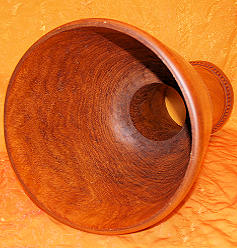
View of the interior of a 5 Star Supreme Class Djembe shell made by Gavin Grosvenor from African Lenké Wood.
All our drums are without exception hand carved from one single tree trunk. They are made from the most sought after resonant African timbers such as Lenké Wood (Afzelia africana Leguminosae), Mahogany (Khaya senegalensis Meliaceae), African Rosewood (Dalbergia spp., Pterocarpus erinaceus, Fabaceae), Buschmango Wood (Cordyla pinnata Fabaceae), Iroko Wood (Chlorophora excelsa Moraceae) and other woods. Every tonewood has its own characteristics and speciallity.
In general we have the the following quality requirements:
- We are most particular over the precise shaping of the bodies interior in order to achieve maximum sonority.
- Our drums are recognisable by a well proportioned precisely cut quadrant end carving of the top tension rim and through a planed surface closing of the playing area. This makes it possible for a very high initial tensioning and a much longer life span of the drum skin than the usual African drums.
- Many of our drums are specially artistically decorated.
- Some are carved around the foot, others have an extravagant decor of hammered metal or ornamental buttons.
Djembé Art professional drumheads
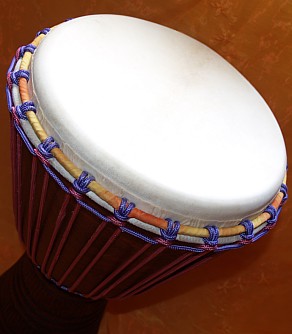
Drumhead of the 5 Star Supreme Class Quality Djembe made by Gavin Grosvenor.
- These are unblemished, without any faults such as cuts, holes or scars.
- They are uniformly thick and clean.
- The skins are stretched while moist, so that the spinal line runs across the centre of the drumhead.
- Whilst drying the goat skins are shaven clean across the playing surface and finally when dry smoothed again.
Precise tuning
Through our devotion to the Djembe for over two decades we have gained conciderable experience. We provide the best tuning for each individual drum enabling the characteristic sound to develop.
- We tune every drum precisely
- We will tune the drum to your personal preference on request
Retightening & retuning
We retune your purchased drum free of charge even after years. For this purpose, please arrange an appointment with us. We ask for your understanding that these free service does not apply to dealers or customers who hav purchased great quantities of drums such as schools. In these cases, we need to calculate the tuning with 10 € per drum.
Djembé Art tautening cordage
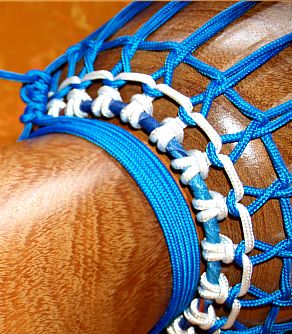
Supreme rope on a 5 Star Supreme Class Djembe made by Gavin Grosvenor.
- High quality cord with minimal stretch 5 to 6 mm thick ensures that our tautening and tuning lasts well. Consequently the retautening of a well played drum is seldom necessary.
- As a result of the exact horizontal alignment of the two upper locking rings and the lower purchase rings, as well as even force distribution of the tautening cordage, we achieve a very harmonious and clear sound pattern.
- Through the professional construction we are able to tightly tauten our Djembe drums. The tight tautening is necessary in order to achieve a fine varying tonal spectrum.
- Bass-, Tone- and Slap-Beats are very clear with our drums and easy to differentiate. Djembe professionals know about these relationships and consequently prefer such instruments.

Djembé Art Forest Awareness

Our Label 'Forest Awareness' shows Djembe drums from Mali and Guinea which come from a more environmentally conscious manufacturing.
- The Djembe timber from Mali come from the region of Sikasso and are controlled by the Ministère Eaux et Fôrets. The tax money for the wood extraction is said to be reinvested in reforestation projects.
- Our main supplier from Guinea operates a reforestation project since 1999, in which the native woods such as Mahogany and Lenké are replanted.
- The Iroko Wood for our Djembes from the Ivory Coast comes from plantations. Iroko has been deliberately cultivated by the French during the colonial period, as it has good characteristics as construction, furniture and drum wood. Today Iroko is one of the most widespread trees in Africa.
Our Djembé Art value categories
We have divided our professional drums into six separate value categories from 0 to 5 stars. This means the more stars, the finer the quality of tone and sound. The highest category is given five stars. In the evaluation we take into account:
- Quality of the materials used (wood, cordage, drumskins).
- Handcrafted workmanship.
- Tonal quality and resonance of the drum.
- Artistic design.
Our 5 Star Supreme Class Quality

All Djembe drums in our 5-Star Supreme Class are personally handcrafted by Gavin Grosvenor. All Djembe shells are carefully selected first class resonant African timbers of highest quality. We meticulously shape the Djembe shells with highest precission. The drumheads are precisely rounded to the millimeter. The outside is highly polished in order to enhance the individual grainstructure and colouring of the wood. We only use supreme quality drum skins that are guaranteed to produce the finest tone. The tautening cords are mainly supreme and dynema. We use specially selected decorative cloth around the tautening rings and lay great care on the harmony of proportions and colors of all materials. Each detail added creates a very special individual masterpice Djembe. Every Supreme Djembe is signed by Gavin Grosvenor, has its individual number, the date of its completion, and our name Djembé Art engraved inside the base of the body. In the past 15 years our Supreme Djembes have become collectors items that are internationally highly valued. Our Supreme Djembe work of the past 15 years can be viewed in our Galerie
Every Supreme Djembe customer receives an individual quality certificate with a detailed description, its number and date of completion.
- For this category we use specially selected African resonant timbers of the highest quality.
- The resonant timbers are dryed for at least two years, sometimes up to five years. This makes them extremely durable and hard.
- In order to achieve the clearest possible tone, the precision of craftsmanship on the interior of the body is essential. We sand the inside of each drum extremely smooth, because any roughness of the surface will interrupt the developement of the sound waves.
- The exterior is highly polished, oiled and waxed for its protection.
- We pay special attention to individual decorations, i.e. carvings, drumskin painting, ornamentation, applications, precious stone inlays etc.
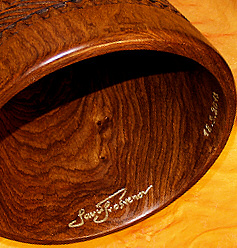
View of the interior of a
5 Star Supreme Djembe
made from African Rosewood
with Gavin Grosvenors signature.
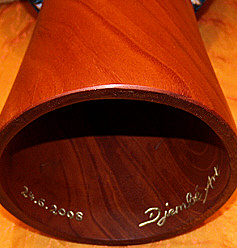
Date of completion and
Djembé Art brandname inside a
5 Star Supreme Djembe
from African Mahogany.
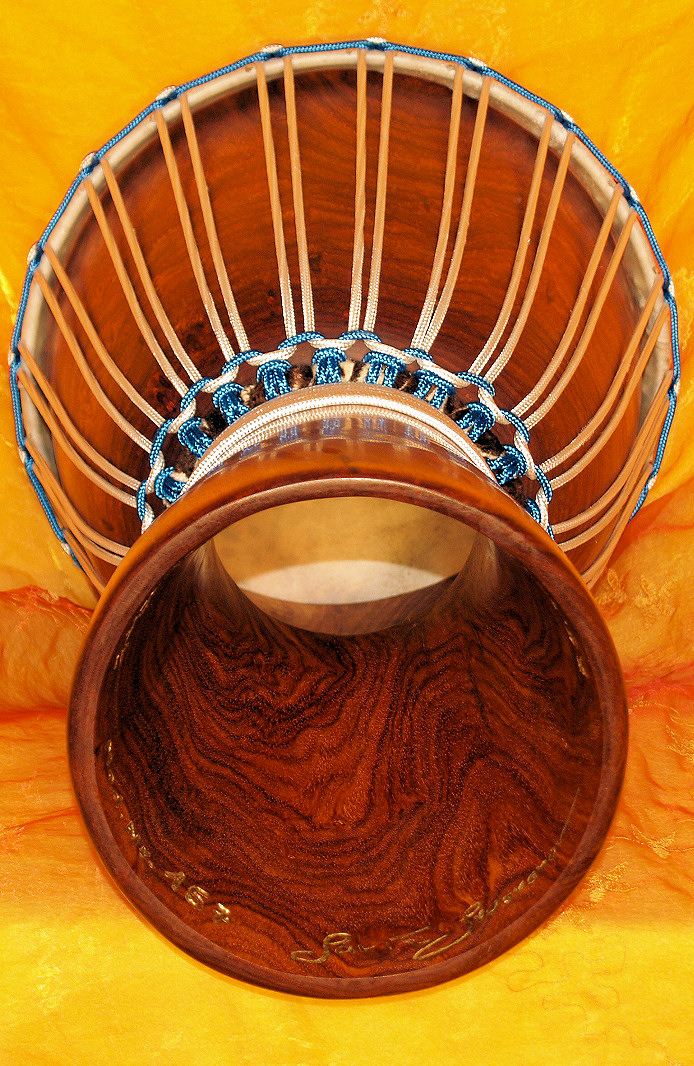
View into the interior of a
5 Star Supreme Djembe
made from African Lenké Wood
100 % hand shaped.
Our 4 Star Superior Class Quality
For this category we import only the top Djembe quality, made by the best Djembe makers from Mali and Guinea. Each drum is very carefully selected. Please compare the photos below.
- Each drum is sanded, oiled and polished on the inside and outside.
- The drumskin is also specially smoothed.
- We take a lot of time for optimal tuning.
- We mainly use pre-stretched European rope.
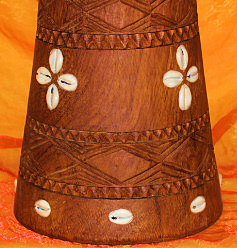
Beautiful cauri shell
inlay decoration on a
4 Star Superior Class
Djembe from Mali.
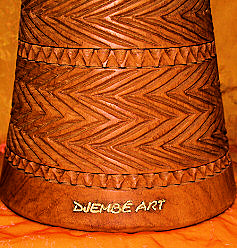
Djembé Art
golden brandname on a
4 Star Superior Class
Djembe from Mali.
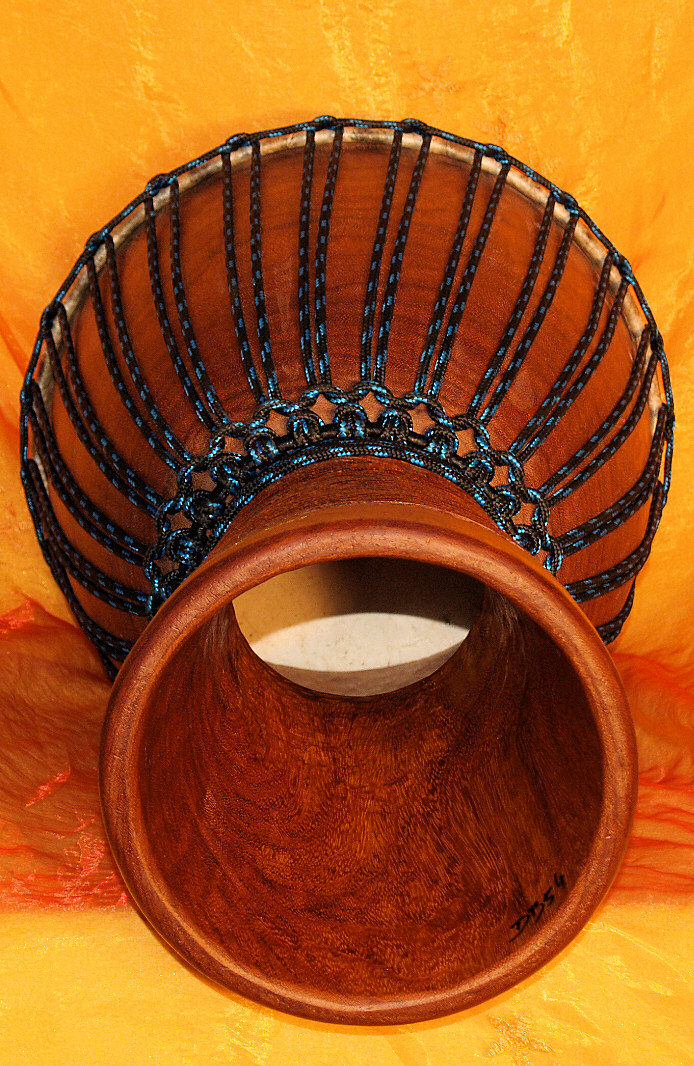
View into the interior of a
4 Star Superior Class
Djembe made from
African Lenké Wood
100 % hand shaped.
Our 3 Star Master Class Quality
In this category we import a well made Djembe quality from Mali and the Guinea. Each drum is carefully selected. The Masterclass is more smoothly finished than the Middle Class. Please compare the photos below. For this Masterclass we uses better timbers, such as Lenké and Mahogany.
- Each drum is additionally sanded and oiled inside.
- The exterior is protected with a special fine oil.
- The drumskin is also specially smoothed.
- We take a lot of time with optimal tuning.
- We mainly use pre-stretched European cordage.
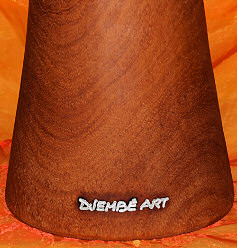
Djembé Art silver brandname
on a 3 Star Master Class
Djembe made from
Lenké Wood from Mali.
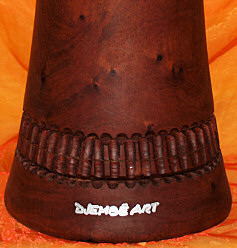
Djembé Art silver brandname
on a 3 Star Master Class
Djembe made from
Mahogany Wood from Guinea.
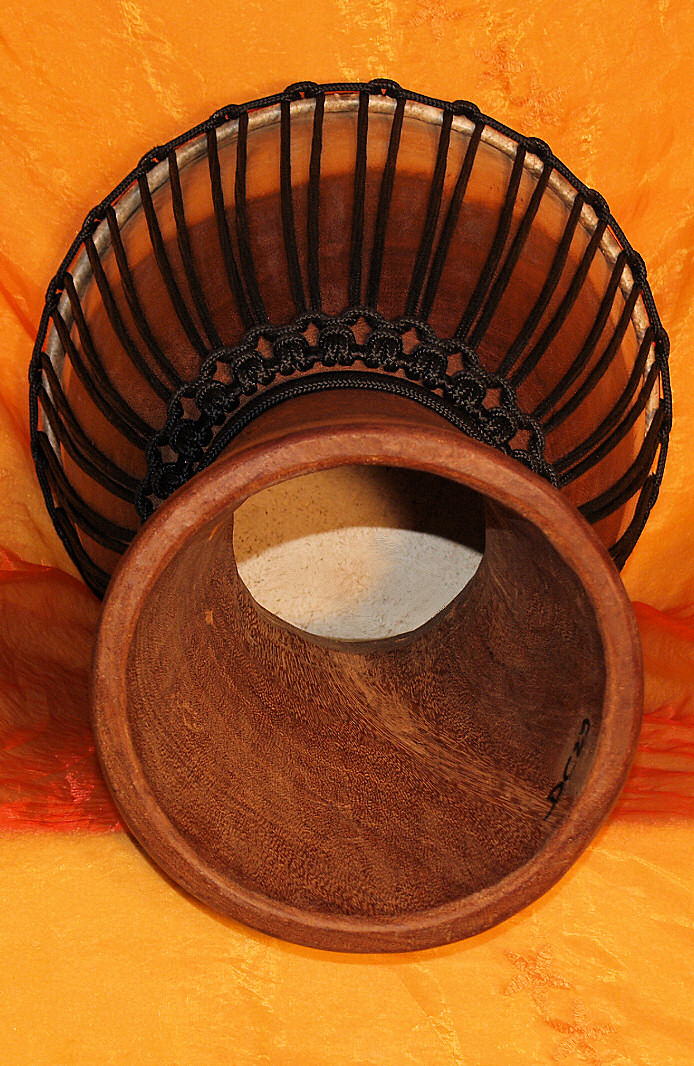
View of the interior of a
3 Star Master Class Djembe
made from Lenké Wood from Mali.
Our 2 Star Middle Class Quality
In this category we import a well made Djembe quality from the Ivory Coast and Guinea. Each drum is carefully selected. The Middle Class is more smoothly finished than the Concert Class. Please compare the photos below. For this Middle Class we uses Iroko Wood.
- The exterior is protected with a special fine oil.
- The drumskin is also specially smoothed.
- We take a lot of time with optimal tuning.
- We mainly use pre-stretched European cordage.
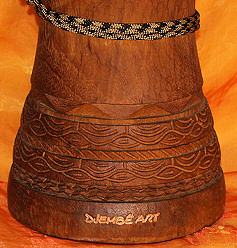
Djembé Art bronze brandname
on 2 Star Middle Class Djembe
made from Iroko Wood
from the Ivory Coast.
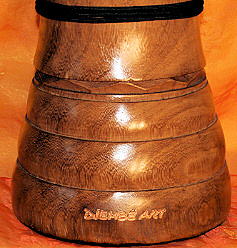
Djembé Art bronze brandname
on a 2 Star Middle Class
Djembe
made from polished Iroko Wood
from the Ivory Coast.
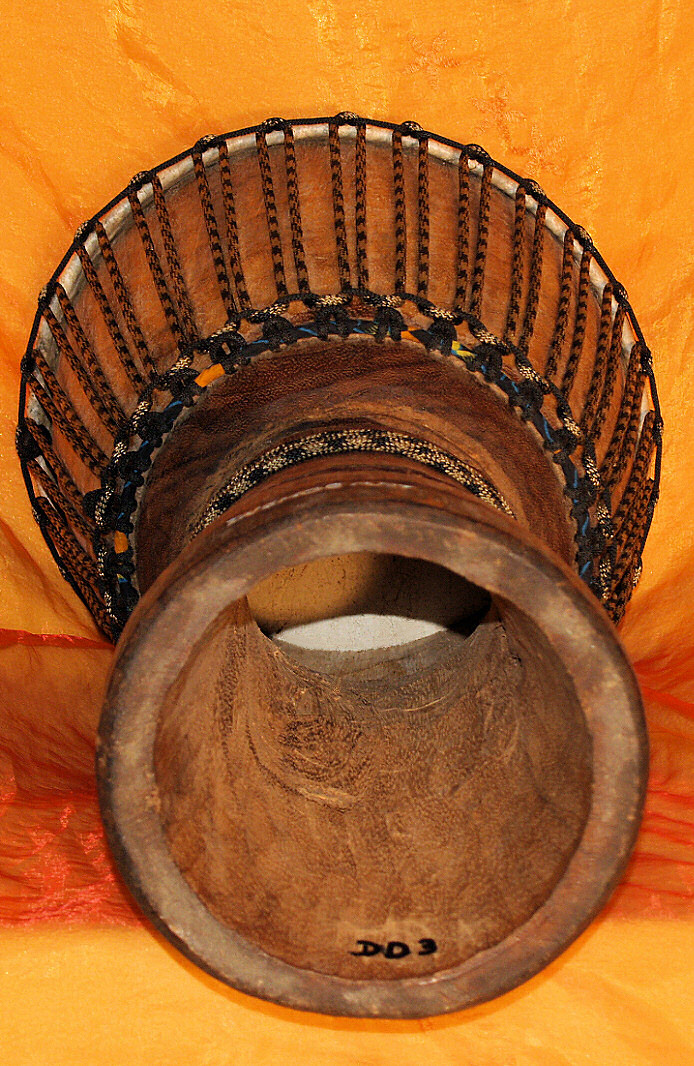
View of the interior of a
2 Star Middle Class Djembe
made from Iroko Wood
from the Ivory Coast.
Our 1 Star Standard Class Quality
In this category we import a very reasonably priced standard Djembe quality from Mali and the Ivory Coast. Please compare the photos below.
- We give each Djembe optimal tuning.
- We mainly use African standard cordage or prestretched European cordage.
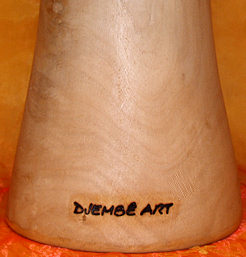
Djembé Art brandname on a
1 Star Standard Class
Djembe made from Melina Wood
from Mali.
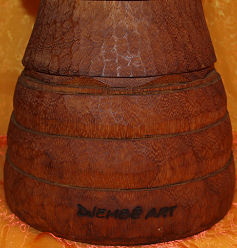
Djembé Art brandname on a
1 Star Standard Class
Djembe made from Iroko Wood
from the Ivory Coast.
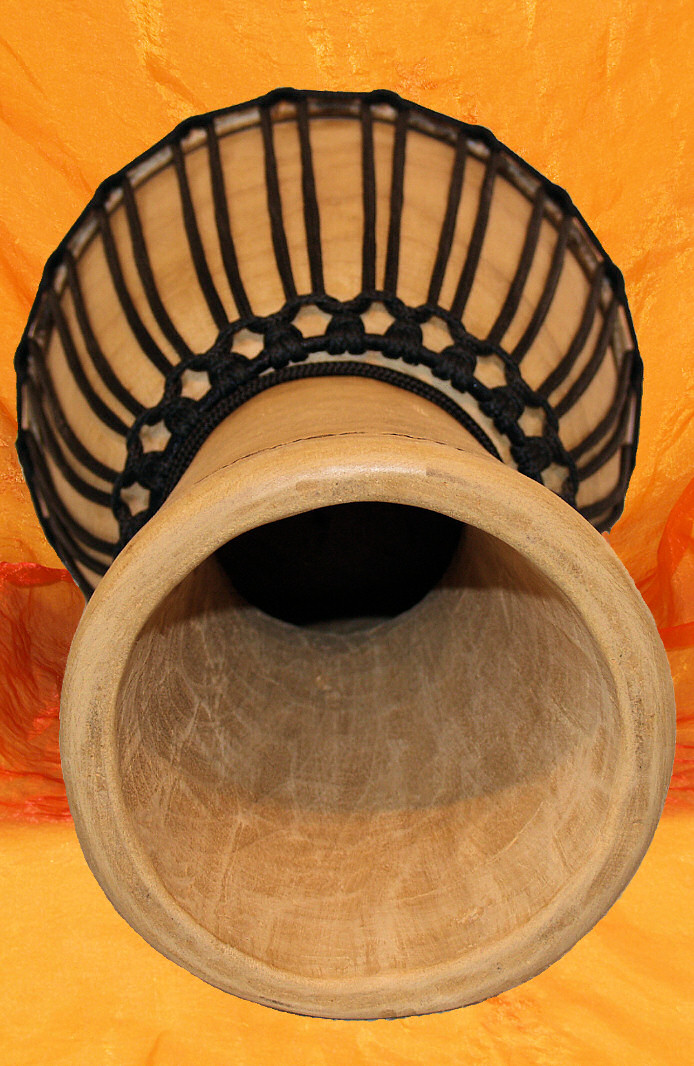
View of the interior of a
1 Star Standard Class
Djembe made from Melina Wood
from Mali.
Our Basic Class Quality
In this category we import a very fair priced Djembe quality from Westafrika. These drums are more roughly carved and finished. Please compare the photos below.
- The Djembes are tuned.
- We use African standard cordage.
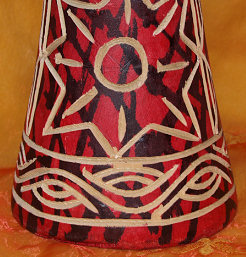
Djembé Art
Basic Class Djembe
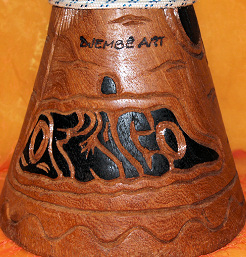
Djembé Art brandname on a
Basic Class Djembe
made from Bushmango Wood
from the Senegal.
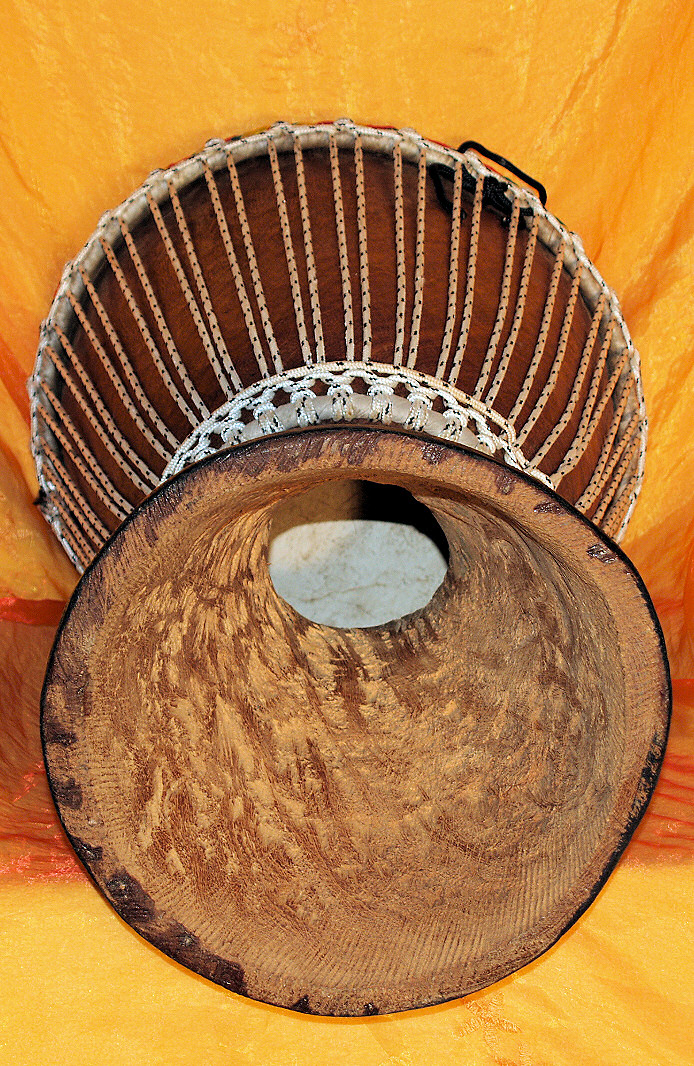
View of the interior of a
Basic Class Djembe
made from Bushmango Wood
from the Senegal.